

Table of Contents
Choosing a new business phone system is about more than replacing old equipment. The right solution should support your team today while helping your business grow in the future.
For a lot of businesses, the choice comes down to a traditional phone system or a cloud phone system. Both support daily business operations, but they differ in cost, flexibility, maintenance, and advanced features.
If you’re looking for a business phone system Victoria, TX businesses can depend on, understanding the differences can help you make the best decision.
Understanding the Basics
Before comparing costs and features, it’s important to understand how each phone system works.
What Is a Cloud Phone System?
A cloud phone system Victoria TX businesses use operates over the internet using Internet Protocol technology and is typically delivered through VoIP services with monthly service plans.
Employees can make and receive phone calls using a desk phone, computer, mobile device, or cell phones through mobile and desktop apps. Many platforms also include video conferencing, video meetings, video calling, team messaging, team chat, and other collaboration tools.
Cloud providers manage updates and infrastructure, giving businesses access to features such as call analytics, call recording, automatic call recording, voicemail transcription, call forwarding, auto attendants, ring groups, call groups, group calling, and AI call summaries without maintaining the technology themselves.
What Is an On-Premises Phone System?
An on-premises or traditional phone system uses equipment installed at your location. Your business owns and manages the hardware, updates, and maintenance.
These systems can provide dependable phone service, especially for organizations with existing infrastructure. But, adding capabilities like smart call routing, inbound call management, call center software, or advanced call center features may require additional investments.
Comparing Costs
Cost is often a major factor when evaluating the best phone systems for small businesses.
Cloud Phone System Costs
A cloud-based system approach typically offers:
Lower upfront costs
Predictable monthly subscriptions
Month-to-month billing options
Easy global calling
Reduced maintenance expenses
Automatic updates
Easy scalability
Businesses achieve cost savings because they avoid purchasing expensive hardware. Providers often include unlimited domestic calling and international calling options within their plans.
For businesses looking to save money, cloud solutions can be an attractive option.
On-Premises System Costs
An on-premises phone system generally requires:
Hardware purchases
Installation costs
Maintenance agreements
Upgrade expenses
Repair costs
Although monthly fees may be lower, long-term ownership costs can increase over time.
Flexibility and Remote Work
Today’s workforce is more mobile than ever.
Benefits of Cloud Flexibility
A cloud phone system Victoria, TX businesses implement can support:
Remote employees
Reliable internet
Mobile workers
Multiple locations
Hybrid team
Growing organizations
Desktop and mobile apps
Employees can place and receive phone calls from virtually anywhere using mobile apps, computers, or desk phones.
Many of the top business phone systems also integrate with Google Workspace, CRM platforms, and other applications to improve team collaboration. Cloud platforms often work as a complete virtual phone system, allowing users to manage incoming calls, voicemail, messaging, and more from one interface.
On-Premises Limitations
Traditional systems can support remote work, but they often require additional hardware and configuration. For businesses with distributed teams, cloud-based communication tools are usually easier to manage.
Maintenance and IT Requirements
One major difference between cloud and on-premises solutions is who manages the technology.
Cloud Systems Reduce IT Burden
With a cloud solution, providers typically handle:
Software updates
Security patches
Infrastructure monitoring
System maintenance
Feature enhancements
Providers also include call handling, smart call routing, fax line support, and reporting tools as part of their offerings.
On-Premises Systems Require Internal Management
When equipment is located on-site, your business is responsible for:
Hardware maintenance
System upgrades
Troubleshooting
Repairs
Performance monitoring
For organizations without dedicated IT resources, this can become time-consuming and costly.
Reliability and Business Continuity
Reliable communications are essential for customer service and productivity.
Cloud-Based Reliability
Most cloud providers use redundant infrastructure and failover systems to maintain service availability.
If an office experiences an outage, employees can often continue using mobile phones, computers, or alternative internet connections to make and receive calls.
For optimal performance, businesses should have reliable business internet, dependable internet services, and a strong internet connection. Many businesses pair cloud communications with business fiber for additional reliability.
This helps support the business communications Victoria, TX companies rely on every day.
On-Premises Reliability
On-premises systems can also be reliable when supported by backup power and redundant infrastructure. However, if physical equipment is damaged or inaccessible, restoring service may take longer.
Features and Scalability
Modern businesses need more than basic calling capabilities.
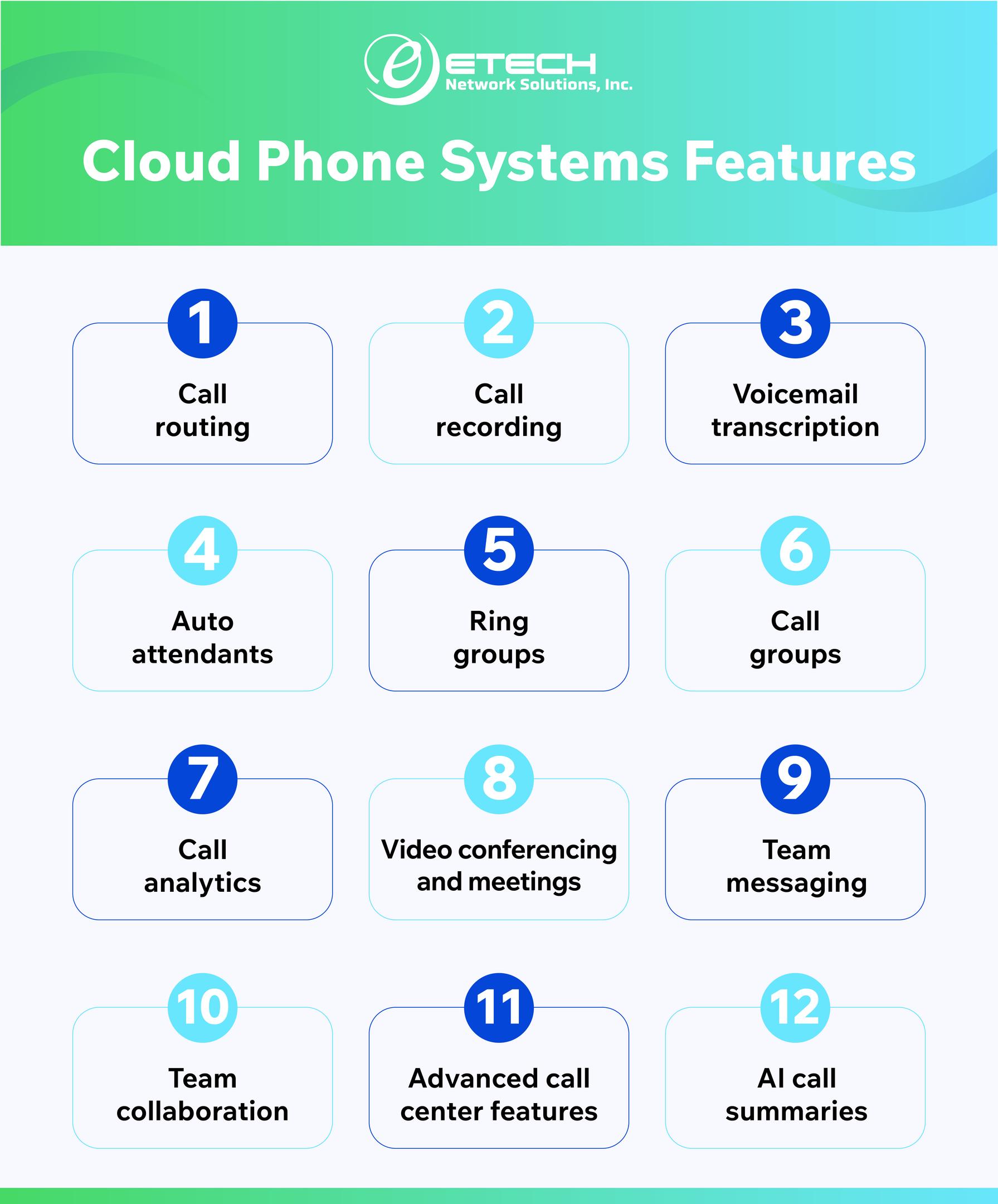
Cloud Systems Offer Advanced Features
Many of the best business phone systems include:
|
|
|
Businesses handling high call volume can also benefit from integrated call center software and advanced call handling tools.
Platforms such as Zoom Phone remain popular among the top business phone systems because they combine voice, messaging, and collaboration features in one platform, but are more enterprise-focused.
On-Premises Growth Challenges
Expanding an on-premises system often requires:
Additional hardware
New licenses
Infrastructure upgrades
Professional installation
As businesses add multiple team members, scaling can become more expensive and complex. This is one reason many organizations seeking a phone system for small business growth choose cloud solutions.
Which Option Is Right for Your Business?
The best business phone solutions depend on your goals and operational needs.
A cloud solution may be ideal if you want:
| An on-premises solution may be a better fit if you want:
|
Whether you’re comparing small business phone systems, researching the best phone service, or evaluating the best business phone systems, the right phone system is the one that supports your business today and tomorrow.
Partner with eTech for Technology Planning in Victoria
At eTech, we help organizations find a business phone system Victoria, TX businesses can rely on for long-term success.
Our team helps evaluate business phone solutions, compare cloud and on-premises options, and identify the right business phone system for your needs. Whether you’re considering a cloud phone system Victoria, TX companies increasingly adopt or a more traditional phone system, we can help guide the decision.
From phone service and office phone systems to VoIP services, video conferencing, team chat, and modern communications platforms, eTech helps businesses implement technology that works.
If you’re ready to improve communications, we can help you build a solution that combines the right business phone system, reliable business internet, and the business communications Victoria, TX organizations need to stay productive and connected. Give us a call to get started.


